
Them Cheatin' Bums: The Dodger's Spin Rate is About to Plummet
A look at how the Dodgers’ starting pitchers could look different in their series against the Padres.

The Padres are about to begin a three-game series with the Dodgers on the same day that sticky substance abuse enforcement officially takes place. The entire Dodger’s rotation is among the league-leaders in spin rate, creating an opportunity for these three match-ups to provide interesting insight into just how dramatic the loss of Spider Tack might be. Let’s take a look at how the new rule may affect the Dodger’s starting pitchers in our upcoming series.
Game 1: Julio Urias
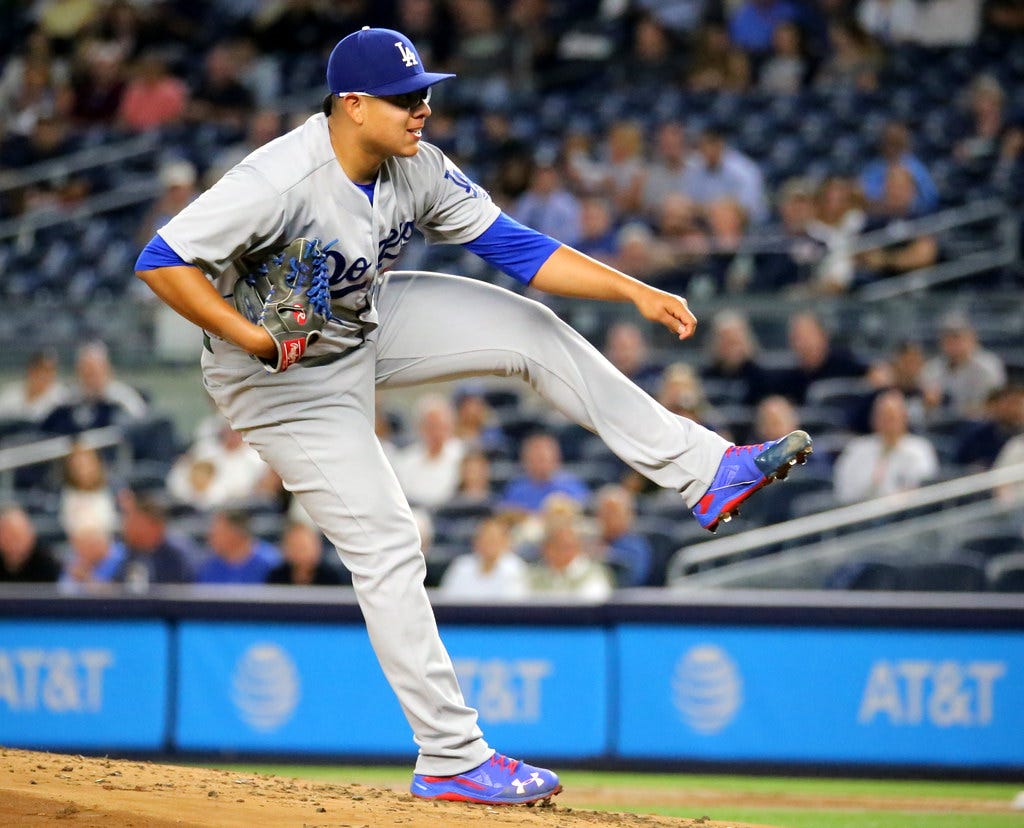
Julio Urias has been an absolute Padre-killer in his career. In 21.2 regular-season innings, he has held us to a 2.08 ERA, a 0.877 WHIP and a 65 tOPS+ (meaning he holds us to 65% of our team’s average hitting performance). He also held us to 5 innings of 1 hit, 1 unearned run ball in an elimination game in last year’s playoffs. But there is a decent chance things may turn around quickly.
Julio Urias is a fairly simple pitcher. He’s a three-pitch pitcher with a four-seam fastball, a changeup and a curveball (which is actually a slurve, but we’ll get to that shortly). Against lefties, he throws a fastball 52.5% of the time and curveball 45.7% of the time and largely abandons the changeup. Against righties, it’s 49.8% fastball, 27.9% curveball and 21.6% changeup. Why do these percentages matter? Because that curveball of his has been incredibly nasty and may be about to take a serious dive in effectiveness.
In 2016, Julio Urias threw both a slider and a curveball. His slider averaged 2,380 rpms and his curve averaged 2,654 rpms. Neither pitch was particularly effective. In 2020, Julio Urias began mixing the pitches together (along with some previously unused, top-grade stick-em) into one pitch: a slurve. The pitch is identified as a curveball on Statcast and has averaged 2,898 rpms (!!!). It’s also held batters to a 0.201 xwOBA this year after holding them to a 0.196 xwOBA last year. Contrast that with his fastball, which has yielded a .406 xwOBA so far in 2021. When you watch him throw the curveball, it looks like a damn frisbee flying across the strike-zone. If Urias isn’t allowed to use a foreign substance to allow that pitch to garner absolutely unnatural horizontal movement, he may just become a different pitcher entirely. When you only have 2.5 pitches, and one is a fastball that is getting hit quite hard, a sudden dip in the quality of your best pitch may not be easy to overcome.
Game 2: Clayton Kershaw
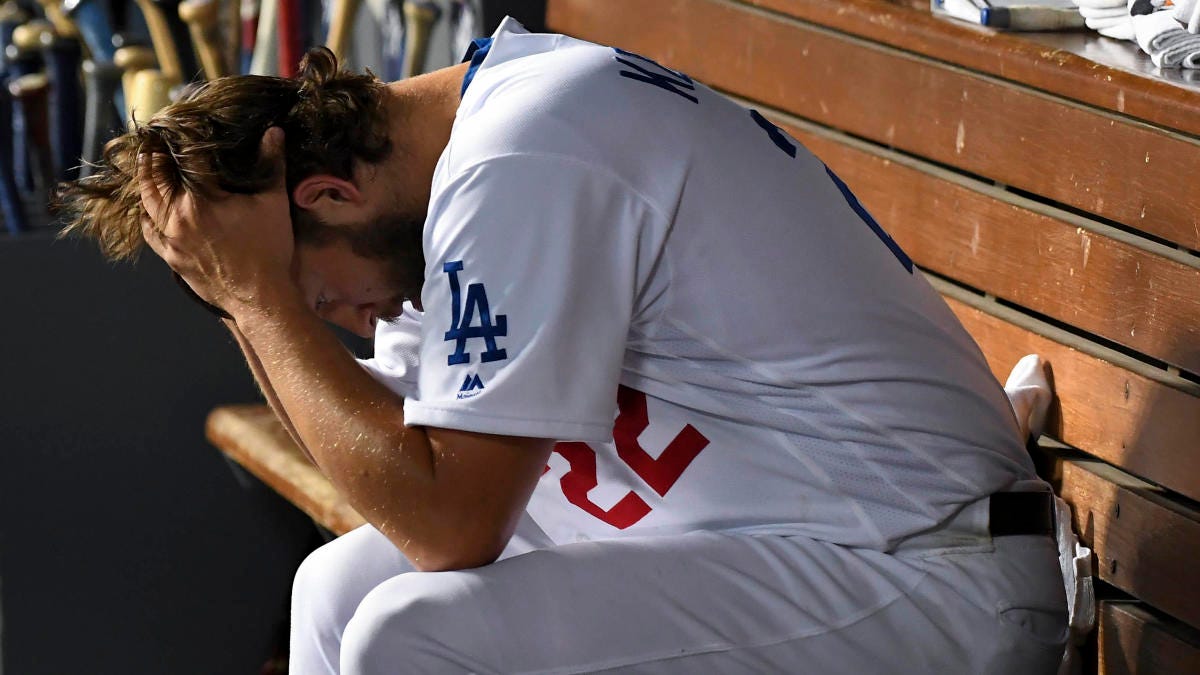
Clayton Kershaw is 33 years old. It’s not at all unusual for a 33-year-old pitcher to lose 4 MPH on his heater as compared to his prime. But would you like to know what IS unusual? Gaining over 300 RPMs of spin on your fastball despite losing that 4 MPH of heat! In that same time his slider has gone from 2,100 RPMs to 2,676 RPMs. Kershaw has already reduced his fastball usage to 37.9% from about 70% earlier in his career largely because his 90.7 MPH heat has been getting scorched. Opponents have knocked the ball to the tune of a .385 xwOBA (somewhere between Tommy Pham and Tatis Jr’s 2021 xwOBA) so far in 2021. Kershaw’s fastball is also only as effective as it currently is because he is able to allow nearly all of the spin he gets on the ball to contribute to vertical movement (he has an almost remarkable lack of horizontal movement on his four-seam fastball and vertical movement is better than horizontal movement when it comes to four-seam fastballs). If you take that 90.7 MPH heat that he often uses up in the strike zone and drop the spin rate, the spin is sure to come almost directly out of vertical movement. 90.7 mph fastballs up in the zone without vertical movement are not good pitches.
Even with a drop in spin rate, I would guess that Kershaw’s slider, which has been losing effectiveness over the years, will likely remain a good pitch. But it’s hard to succeed as a Major League starting pitcher without a half-way decent fastball, and I have serious doubts that he’ll have a serviceable heater without that extra stick’em driving up the RPMs. There’s a chance we see Kershaw go full-on junkballer, flipping up sliders and curveballs with reckless abandon very, very soon.
Game 3: Trevor Bauer
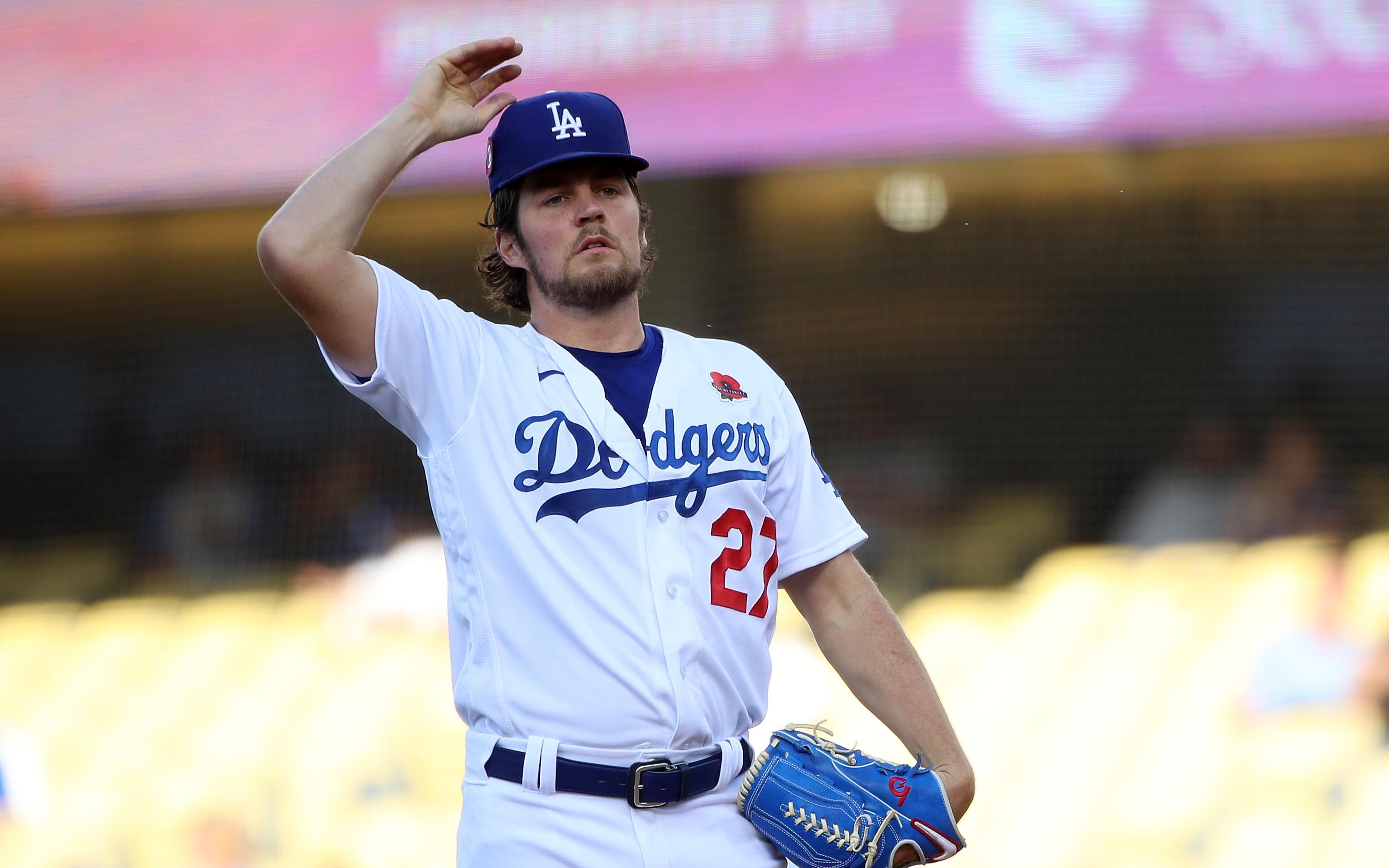
Trevor Bauer remains the MLB’s poster-child for the abuse of sticky substances. He was incredibly vocal about his distaste for the widespread use of illegal substances and then took the brave step of cheating at baseball so that the spotlight could shine down upon other cheaters and make the MLB a better place. It must have been really difficult for him to find the substances that are most effective at helping a player cheat and then cheating his way to a Cy Young award and tens of millions of dollars more than he would have otherwise been worth on the open market. What a brave, selfless man.
Here’s the thing, Trevor Bauer is a good pitcher even without the sticky. But he’s a GREAT pitcher with the sticky. He had a career ERA/FIP of 4.04/3.92 before he bravely started cheating. Since then, he has a ridiculous 2.13/3.33 mark. His K’s/9 have also jumped from 9.50 to 11.69 and his BB/9 have dropped from 3.52 to 2.61. When he’s not cheating, he eats a ton of innings and keeps his team in the game. When he cheats, he’s Cy Young incarnate.
So what will be different when Bauer isn’t allowed to courageously sacrifice his moral standards in order to cheat for the good of the game? All of his pitches have improved dramatically since he started gluing his hands. But in particular, he has seen dramatic improvement in his four-seam fastball and cutter (.396 and .321 xwOBA in 2019 and .319 and .284 xwOBA in 2021). Those two pitches are incredibly important in his repertoire because they are the pitches he most often throws on 0-0 counts and when behind in the count. When he falls behind in the count he may now be forced to offer up a juicy pitch, or increase his offspeed usage and risk raising his walk-totals.